
Quick Answer
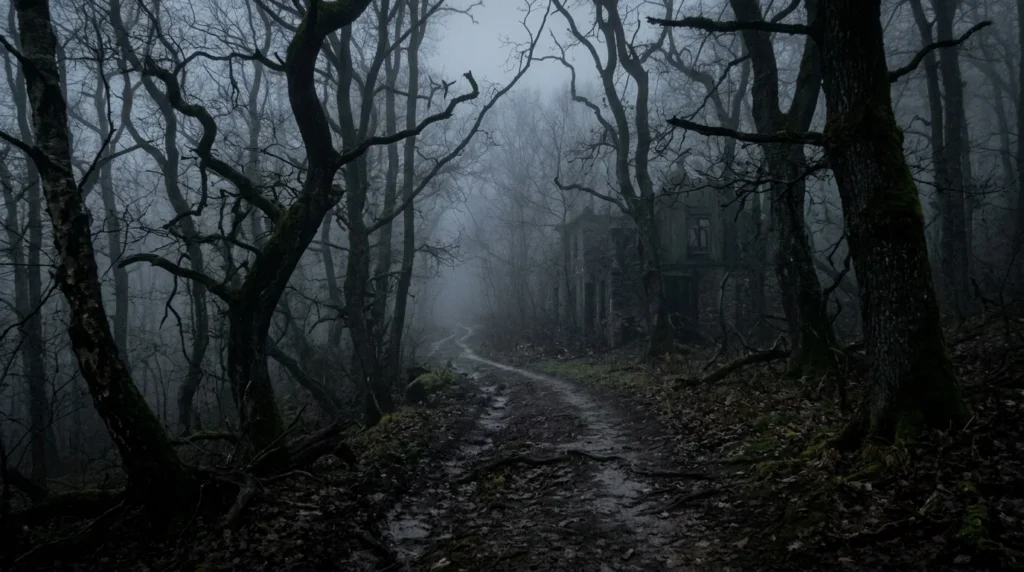
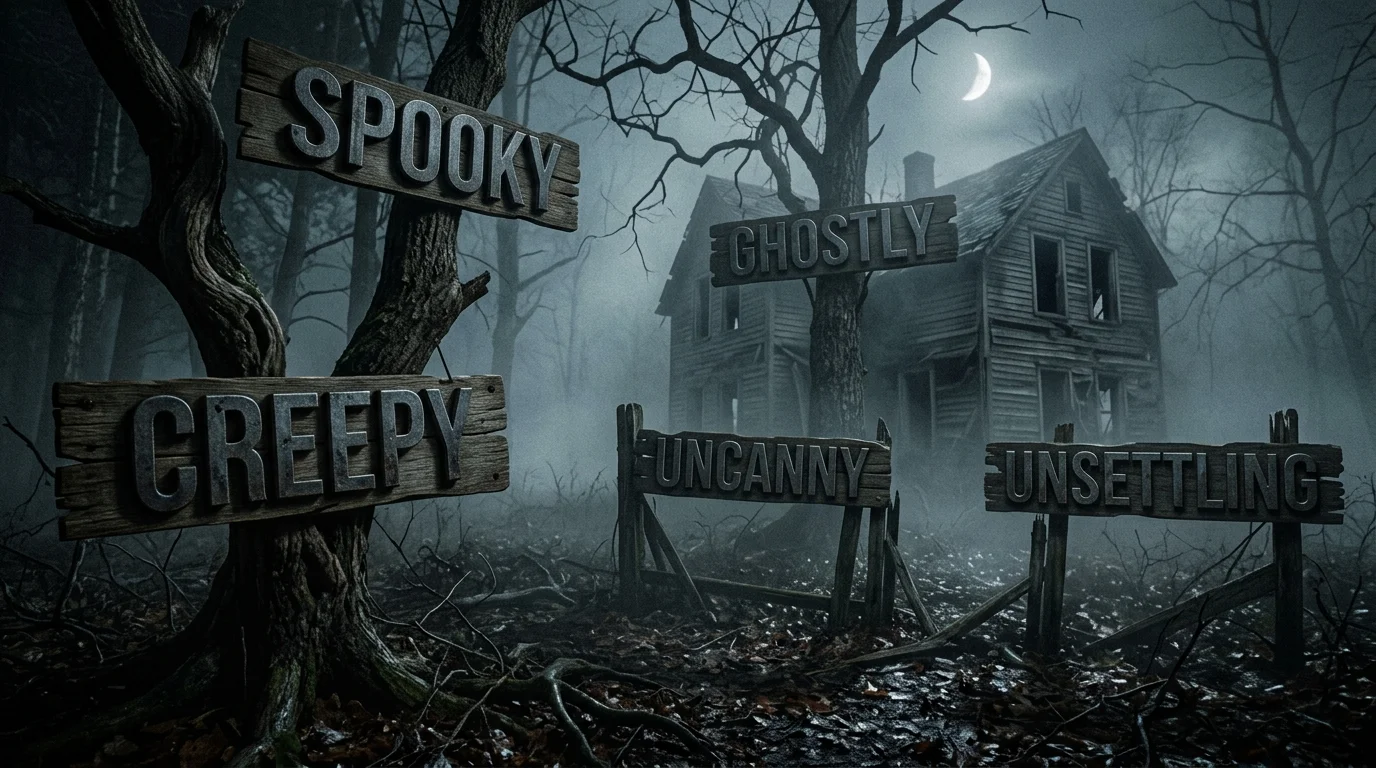
Common synonyms for eerie include creepy, spooky, uncanny, unsettling, strange, weird, haunting, chilling, unnerving, disturbing, mysterious, and ominous. The best choice depends on the feeling you want to create. Creepy suggests discomfort or fear, uncanny suggests something strangely unfamiliar, and haunting often describes an atmosphere that stays in your mind.
Quick Synonym List
Here are useful alternatives to eerie, grouped by meaning and tone:
- Creepy — unpleasantly strange or frightening
- Spooky — frightening in a ghostly or supernatural way
- Uncanny — strangely unfamiliar or unsettling
- Unsettling — causing discomfort or unease
- Unnerving — making someone nervous or uncomfortable
- Haunting — strangely memorable or emotionally disturbing
- Chilling — causing a strong feeling of fear or discomfort
- Disturbing — causing worry, discomfort, or emotional unease
- Ominous — suggesting that something bad may happen
- Sinister — suggesting evil or harmful intentions
- Frightening — causing fear
- Scary — causing fear or alarm
- Terrifying — causing extreme fear
- Menacing — suggesting a threat or danger
- Foreboding — creating a feeling that something bad is coming
- Ghostly — resembling or suggesting a ghost
- Spectral — resembling a ghost or apparition
- Otherworldly — seeming to belong to another world
- Supernatural — beyond ordinary natural explanation
- Mysterious — difficult to understand or explain
- Strange — unusual or unfamiliar
- Weird — very unusual or unexpected
- Bizarre — extremely unusual
- Unusual — different from what is normal
- Uncomfortable — causing physical or emotional discomfort
- Disquieting — causing unease or anxiety
- Creepy-crawly — associated with an unpleasant, creepy feeling
- Spine-chilling — extremely frightening or unsettling
- Hair-raising — intensely frightening or alarming
- Macabre — associated with death or grim subjects
- Morbid — focused on unpleasant subjects such as death
- Bleak — cold, depressing, or without hope
- Desolate — empty, lonely, and abandoned-looking
- Shadowy — dark, unclear, or mysterious
- Lurking — remaining hidden while suggesting possible danger
Important: These words overlap with eerie, but they do not all mean exactly the same thing. Some describe fear, others strangeness, danger, supernatural qualities, or emotional discomfort.
What Does “Eerie” Mean?
Eerie is an adjective describing something that feels strange, mysterious, frightening, or unsettling, especially because it seems difficult to explain.
For example:
The abandoned house had an eerie silence.
The silence is not necessarily dangerous. It simply creates an unusual, uncomfortable atmosphere.
You can use eerie for:
- places
- sounds
- silence
- lighting
- situations
- appearances
- behavior
- atmospheres
For example:
An eerie fog covered the road.
There was an eerie silence in the hallway.
The empty theater looked eerie at night.
The key idea is often unease caused by something strange or unnatural.
The Closest Synonyms for Eerie
1. Creepy
Meaning: Strange or frightening in a way that makes you uncomfortable.
How it differs: Creepy is probably one of the closest everyday alternatives to eerie, but it often feels more personal or immediate.
Tone: Informal to neutral.
Best for: People, places, situations, sounds, and behavior.
That abandoned building looks creepy at night.
Watch out: Creepy can describe someone’s behavior, especially when that behavior makes others uncomfortable. Eerie is more strongly associated with atmosphere.
2. Spooky
Meaning: Frightening in a way associated with ghosts, haunted places, or supernatural events.
Tone: Casual and conversational.
The old cemetery looked spooky after dark.
How it differs: Spooky often has a playful or Halloween-like quality, while eerie can be subtler and more serious.
3. Uncanny
Meaning: Strange in a way that feels unfamiliar, unnatural, or difficult to explain.
Tone: Neutral to formal.
There was something uncanny about the empty room.
How it differs: Uncanny emphasizes strangeness and unfamiliarity, not necessarily fear.
This is an especially useful alternative when something looks almost normal but feels strangely wrong.
4. Unsettling
Meaning: Causing discomfort, unease, or anxiety.
The sudden silence was unsettling.
How it differs: Unsettling is broader than eerie. Something can be unsettling without being mysterious or supernatural.
5. Unnerving
Meaning: Making someone nervous or uncomfortable.
His calm reaction to the strange situation was unnerving.
How it differs: Unnerving focuses more directly on the effect something has on a person.
6. Haunting
Meaning: Creating a powerful impression that remains in someone’s thoughts or feelings.
The abandoned village had a haunting beauty.
How it differs: Haunting does not always mean frightening. It can describe something sad, beautiful, memorable, or emotionally powerful.
7. Chilling
Meaning: Causing fear or an intense feeling of discomfort.
The story had a chilling ending.
How it differs: Chilling is generally stronger than eerie when describing fear.
8. Disturbing
Meaning: Causing worry, discomfort, or emotional distress.
The footage showed a disturbing scene.
How it differs: Disturbing is much broader and can describe serious or troubling subjects that are not mysterious or eerie.
9. Ominous
Meaning: Suggesting that something bad or unpleasant may happen.
Dark clouds gave the afternoon an ominous feeling.
How it differs: Ominous is about possible future danger or trouble. Eerie is about strange or unsettling atmosphere.
10. Sinister
Meaning: Suggesting evil, danger, or harmful intentions.
The abandoned building had a sinister appearance.
How it differs: Sinister usually carries a stronger implication of evil or malicious intent.
More Useful Alternatives
Frightening
A broad, direct word meaning something causes fear.
The sudden noise was frightening.
Use this when you want to state the emotional effect clearly rather than create a mysterious atmosphere.
Scary
A common conversational word for something that causes fear.
That movie was really scary.
It is less nuanced than eerie.
Terrifying
An intense alternative meaning extremely frightening.
The storm was terrifying.
It is considerably stronger than eerie.
Menacing
Suggesting a threat or danger.
The figure looked menacing from a distance.
Use it when there is a sense of active threat.
Foreboding
Creating a feeling that something bad is likely to happen.
An atmosphere of foreboding filled the room.
It is more formal and focuses on anticipated trouble.
Ghostly
Resembling or suggesting a ghost.
A ghostly figure appeared through the mist.
This is more specific than eerie.
Spectral
Ghost-like or resembling a specter.
A spectral light appeared in the distance.
This is literary and relatively formal.
Otherworldly
Seeming to come from another world or reality.
The landscape had an otherworldly appearance.
This does not necessarily mean frightening. It can also suggest beauty or wonder.
Mysterious
Difficult to explain, understand, or identify.
There was a mysterious light in the distance.
Something mysterious may be intriguing rather than frightening.
Macabre
Associated with death or grim subjects.
The museum displayed several macabre artworks.
It is more specific than eerie and should not be used simply to mean “strange.”
Formal Alternatives
For formal, literary, or analytical writing, consider:
- Uncanny
- Unsettling
- Disquieting
- Ominous
- Foreboding
- Spectral
- Macabre
- Otherworldly
Disquieting
Disquieting means causing unease or worry.
The report revealed a disquieting pattern.
This works well in formal writing, but it is not specifically associated with ghosts or mysterious places.
Ominous
The silence had an ominous quality.
Use it when the atmosphere suggests danger or an unpleasant future event.
Spectral
The landscape took on a spectral appearance in the fog.
Use it when the ghost-like quality is central to the description.
Casual Alternatives
In everyday conversation, these are more natural:
- Creepy
- Spooky
- Scary
- Weird
- Strange
- Chilling
- Unsettling
For example:
That house is eerie.
You might say:
That house is creepy.
or:
That house is really spooky.
Creepy is generally the closest casual substitute.
Synonyms vs. Near Synonyms
| Alternative | Relationship | Can Replace “Eerie”? | Tone | Best Context |
|---|---|---|---|---|
| Creepy | Close synonym | Usually | Casual/neutral | Everyday descriptions |
| Spooky | Close/contextual | Usually | Casual | Ghosts, Halloween, haunted places |
| Uncanny | Near synonym | Often | Formal/neutral | Strange, unnatural situations |
| Unsettling | Close synonym | Often | Neutral | Unease or discomfort |
| Unnerving | Near synonym | Often | Neutral | Effect on a person |
| Haunting | Near synonym | Often | Literary/neutral | Memorable atmosphere |
| Chilling | Near synonym | Sometimes | Strong | Fear |
| Ominous | Contextual | Sometimes | Formal | Implied danger |
| Sinister | Contextual | Sometimes | Strong | Evil or threat |
| Mysterious | Related | Sometimes | Neutral | Unexplained situations |
| Ghostly | Narrower | Sometimes | Neutral/literary | Ghost-like appearance |
| Spectral | Narrower | Sometimes | Literary | Ghost-like imagery |
| Otherworldly | Near synonym | Sometimes | Neutral/literary | Unnatural or extraordinary appearance |
| Terrifying | Related, stronger | Rarely | Strong | Extreme fear |
| Macabre | Related, narrower | Rarely | Formal/literary | Death and grim subjects |
Comparison Table
| Word/Phrase | Meaning | Tone | Strength | Best Use | Interchangeable? |
|---|---|---|---|---|---|
| Eerie | Strange and unsettling | Neutral | Medium | Atmosphere | — |
| Creepy | Unpleasantly strange or frightening | Casual | Medium | People, places, situations | Usually |
| Spooky | Ghostly or supernatural and frightening | Casual | Medium | Haunted settings | Often |
| Uncanny | Strangely unfamiliar or unnatural | Formal/neutral | Medium | Unusual situations | Often |
| Unsettling | Causing unease | Neutral | Medium | General discomfort | Often |
| Unnerving | Making someone nervous | Neutral | Medium | Personal reaction | Often |
| Haunting | Emotionally powerful and lingering | Literary/neutral | Medium | Memories, scenes, places | Sometimes |
| Chilling | Strongly frightening | Neutral | Strong | Stories, events | Sometimes |
| Ominous | Suggesting future trouble | Formal | Strong | Weather, signs, situations | Sometimes |
| Sinister | Suggesting evil or harmful intent | Strong | Strong | People, places, actions | Sometimes |
| Ghostly | Resembling a ghost | Literary/neutral | Medium | Figures, light, sounds | Context-dependent |
| Terrifying | Extremely frightening | Neutral | Very strong | Fear | Rarely |
| Mysterious | Difficult to explain | Neutral | Low–medium | Unknown events | Context-dependent |
How to Choose the Right Alternative
Want a natural everyday word?
Choose creepy.
The empty hallway was creepy.
Want a ghostly or supernatural feeling?
Choose spooky.
The old house looked spooky.
Want strange rather than frightening?
Choose uncanny.
There was something uncanny about his expression.
Want to emphasize discomfort?
Choose unsettling.
The sudden change in his behavior was unsettling.
Want to emphasize personal nervousness?
Choose unnerving.
Her silence was unnerving.
Want a lingering emotional effect?
Choose haunting.
The photograph had a haunting quality.
Want stronger fear?
Choose chilling.
It was a chilling discovery.
Want to suggest future danger?
Choose ominous or foreboding.
The dark clouds looked ominous.
Want to suggest evil?
Choose sinister.
The message had a sinister tone.
Want something ghost-like?
Choose ghostly or spectral.
A ghostly figure appeared in the distance.
Sentence Transformations
1. Describing a place
Original:
The abandoned hotel was eerie at night.
Better Alternative:
The abandoned hotel was creepy at night.
Why:
Creepy is more natural in casual conversation and keeps the unsettling feeling.
2. Describing a supernatural setting
Original:
The forest looked eerie after sunset.
Better Alternative:
The forest looked spooky after sunset.
Why:
Spooky works especially well when the setting suggests ghosts or supernatural activity.
3. Describing something strangely familiar
Original:
His expression was eerie.
Better Alternative:
His expression was uncanny.
Why:
Uncanny works when something looks normal but feels strangely wrong or unfamiliar.
4. Describing discomfort
Original:
The silence was eerie.
Better Alternative:
The silence was unsettling.
Why:
Unsettling focuses on the discomfort created by the silence.
5. Creating stronger fear
Original:
The story had an eerie ending.
Better Alternative:
The story had a chilling ending.
Why:
Chilling increases the intensity and suggests a stronger emotional reaction.
6. Suggesting danger
Original:
The sky had an eerie appearance.
Better Alternative:
The sky had an ominous appearance.
Why:
Ominous suggests that the unusual appearance may signal something bad.
7. Creating a literary effect
Original:
The abandoned town had an eerie beauty.
Better Alternative:
The abandoned town had a haunting beauty.
Why:
Haunting captures both beauty and an emotional quality that remains in the mind.
8. Describing a threatening person
Original:
The stranger had an eerie look.
Better Alternative:
The stranger had a sinister look.
Why:
Sinister adds the idea that the person may have harmful or evil intentions.
9. Describing a ghost-like figure
Original:
An eerie shape appeared in the fog.
Better Alternative:
A spectral shape appeared in the fog.
Why:
Spectral specifically emphasizes a ghost-like appearance.
10. Describing an unexplained event
Original:
An eerie light appeared outside the window.
Better Alternative:
A mysterious light appeared outside the window.
Why:
Mysterious shifts attention from fear to the fact that the light is unexplained.
Common Mistakes
1. Using “terrifying” when you only mean “eerie”
These words differ in intensity.
The empty house was eerie.
This creates an unsettling atmosphere.
The empty house was terrifying.
This says the house caused extreme fear.
Fix: Use eerie when you want subtle unease rather than intense fear.
2. Treating “spooky” and “eerie” as identical
They overlap, but spooky has a stronger association with ghosts, haunted places, and supernatural themes.
Fix: Use spooky for a ghostly or playful fright; use eerie for broader mysterious unease.
3. Using “sinister” for every strange thing
Sinister suggests evil or harmful intent.
A strange sound may be eerie without being sinister.
Fix: Choose sinister only when there is a suggestion of danger or malicious intent.
4. Confusing “uncanny” with “scary”
Something uncanny can be fascinating rather than frightening.
The robot’s movements were uncanny.
This means they felt strangely human or unnatural.
Fix: Use uncanny when strangeness is more important than fear.
5. Using “ominous” for something that has no suggestion of future trouble
Ominous implies that something unpleasant may happen.
Fix: If you only mean strange or unsettling, eerie may be more accurate.
6. Calling everything “haunting”
Haunting often suggests a powerful impression that lingers.
The song had a haunting melody.
It does not necessarily mean frightening.
Fix: Use haunting when the emotional or memorable quality matters.
7. Using “macabre” simply to mean creepy
Macabre specifically relates to death or grim subjects.
Fix: Use macabre when death-related imagery or themes are central.
8. Assuming “mysterious” means frightening
Something mysterious can be exciting, fascinating, beautiful, or puzzling.
She received a mysterious letter.
There is no necessary fear.
Fix: Use eerie when the mystery creates an unsettling atmosphere.
Grammar and Usage
Eerie is an adjective.
Common patterns include:
- eerie + noun
- seem/look/feel + eerie
- an eerie atmosphere
- an eerie silence
- an eerie sound
- an eerie feeling
- an eerie glow
- an eerie resemblance
Examples:
We heard an eerie sound outside.
The room felt eerie after everyone left.
There was an eerie silence in the building.
Eerie vs. eerily
Eerie is an adjective:
The house was eerie.
Eerily is an adverb:
The house was eerily quiet.
A common mistake is using eerie where an adverb is required.
Incorrect:
The room was eerie quiet.
Better:
The room was eerily quiet.
When Not to Use an Alternative
Sometimes eerie is more precise than its alternatives.
Use eerie when you want to combine:
strangeness + mystery + unease
For example:
An eerie silence filled the room.
Replacing it with:
A scary silence filled the room.
changes the tone. Scary is more direct and less atmospheric.
Likewise:
The landscape had an eerie quality.
is different from:
The landscape had a sinister quality.
The second sentence suggests something threatening or evil.
Choose the original word when its particular combination of mystery and unease is what you mean.
Writing Tips: How to Use “Eerie” Effectively
Eerie is especially useful in descriptive and creative writing because it creates atmosphere without explaining exactly why something feels frightening.
Compare:
The house was scary.
with:
The house stood silent beneath the fog, its windows dark and empty.
The second sentence creates an eerie atmosphere without simply telling the reader that the house is scary.
When choosing an alternative, consider the exact effect:
- Eerie → strange and unsettling
- Creepy → uncomfortable and frightening
- Spooky → ghostly or supernatural
- Uncanny → strangely unfamiliar
- Haunting → emotionally lingering
- Chilling → strongly frightening
- Ominous → suggesting future trouble
- Sinister → suggesting evil
- Mysterious → unexplained, not necessarily frightening
This distinction helps your writing become more precise without making it unnecessarily complicated.
FAQs
What is another way to say “eerie”?
You can say creepy, spooky, uncanny, unsettling, unnerving, haunting, chilling, ominous, mysterious, or ghostly, depending on the context.
What is a formal synonym for “eerie”?
Uncanny, disquieting, ominous, foreboding, spectral, and macabre can work in formal or literary contexts, but each has a slightly different meaning.
What is a casual synonym for “eerie”?
Creepy, spooky, scary, and weird are common conversational alternatives.
Is “creepy” the same as “eerie”?
They are close, but not identical. Creepy usually describes something that makes you uncomfortable or frightened, while eerie often describes a strange, mysterious atmosphere.
Is “uncanny” a synonym for “eerie”?
Often, yes. Both can describe something that feels strangely wrong or unsettling. However, uncanny emphasizes unfamiliarity or unnaturalness more than fear.
What is a stronger word than “eerie”?
Depending on the intended meaning, chilling, frightening, terrifying, or sinister can be stronger. They should not be treated as exact substitutes because they add different shades of meaning.
What is the opposite of “eerie”?
Possible opposites include comforting, pleasant, familiar, cheerful, welcoming, peaceful, and reassuring, depending on what aspect of eerie you want to contrast.
Key Takeaways
- Eerie describes something strange, mysterious, and unsettling, often without implying extreme fear.
- Creepy is the closest casual alternative, while spooky is especially associated with ghosts and supernatural settings.
- Uncanny emphasizes unnatural or strangely unfamiliar qualities rather than straightforward fear.
- Ominous suggests future danger, while sinister suggests evil or harmful intent.
- Choose alternatives based on the exact atmosphere you want rather than replacing eerie simply for vocabulary variety.