
Quick Answer
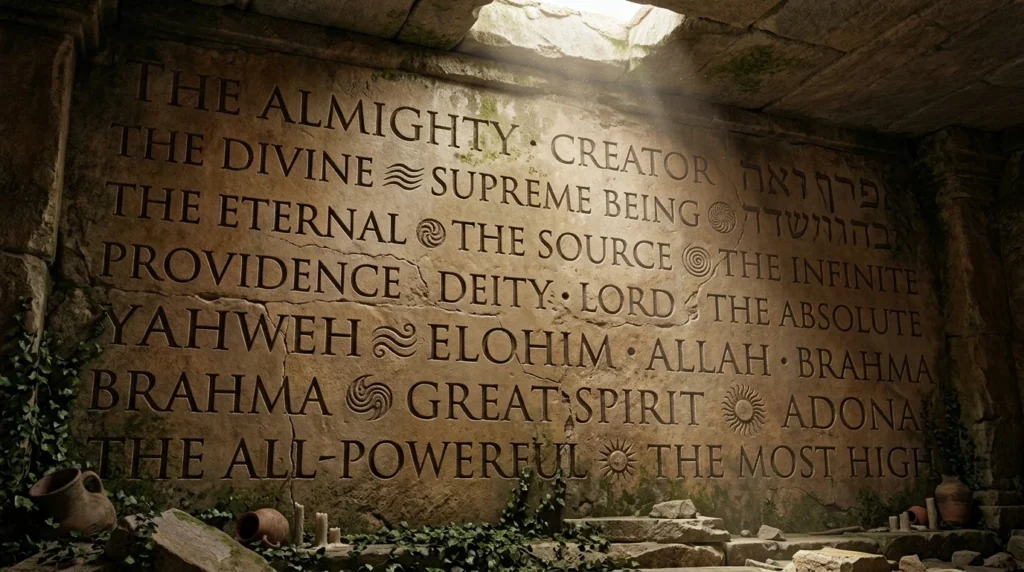
The closest general synonyms for God include deity, Supreme Being, Creator, Lord, Almighty, Divinity, Higher Power, Divine Being, Holy One, and Godhead. Some are direct religious alternatives, while others emphasize a specific quality such as power, creation, holiness, eternity, or spiritual authority.
Quick List of Synonyms for God
- Deity
- Supreme Being
- Creator
- Lord
- Almighty
- Divinity
- Divine Being
- Higher Power
- Holy One
- Godhead
- The Divine
- Eternal One
- Maker
- Sovereign
- Supreme Power
- Heavenly Father
- Divine Creator
- Celestial Being
- Sacred Being
- Universal Spirit
- Divine Power
- Supreme Creator
- Immortal
- Deity
- Providence
- Lord of Creation
- Higher Being
- Supreme Deity
- Divine Presence
- The Almighty
- The Creator
- The Holy One
- The Eternal
- Sacred Power
- Spiritual Being
- Transcendent Being
- Heavenly Being
- Supreme Authority
- Universal Creator
- Divine Source
Closest Synonyms for God
Deity
Deity is one of the closest general alternatives to god.
It means a divine being or god, especially one worshiped as part of a religious tradition.
- “The ancient people worshiped a powerful deity.”
- “The temple was dedicated to the deity.”
Best for: Religion, mythology, history, and academic writing.
Watch out: Deity is broader than God. It can refer to a god or goddess from a polytheistic tradition.
Supreme Being
Supreme Being refers to the highest or ultimate divine reality.
- “They believe in one Supreme Being.”
- “The prayer is addressed to the Supreme Being.”
Tone: Formal, theological, respectful.
Best for: Religious studies, philosophy, theology, and formal writing.
Creator
Creator emphasizes God’s role as the one who created the universe or all existence.
- “They prayed to their Creator.”
- “The Creator is described as the source of all life.”
Best for: Religious, philosophical, and spiritual writing.
Watch out: Creator emphasizes creation rather than every attribute associated with God.
Lord
Lord is a traditional religious title used for God in several faith traditions.
- “They placed their trust in the Lord.”
- “The Lord is described as merciful.”
Tone: Religious, traditional, reverent.
Watch out: Lord can also refer to a human title or ruler, so context matters.
Almighty
Almighty emphasizes unlimited or supreme power.
- “The Almighty is invoked in the prayer.”
- “They placed their faith in the Almighty.”
Tone: Formal, religious, reverent.
Best for: Religious prose, prayers, poetry, and traditional writing.
Divinity
Divinity can refer to the state or nature of being divine, or to a divine being.
- “The ancient text describes the king’s connection to divinity.”
However, divinity does not always mean exactly the same thing as God. It can describe divine nature or divine status.
Spiritual and Religious Alternatives
Divine Being
Divine Being is a broad formal expression for a supernatural or sacred being.
Best for: Theology, philosophy, religious studies, and spiritual writing.
Higher Power
Higher Power is a broad spiritual expression for a power greater than oneself.
- “She looked to a Higher Power for guidance.”
It is less specific than God and can be used by people with different spiritual beliefs.
Holy One
Holy One emphasizes holiness and sacredness.
- “The Holy One is honored in the prayer.”
Tone: Reverent, poetic, religious.
Godhead
Godhead is a specialized theological term referring to the divine nature or essence of God. In some Christian contexts, it is associated with the nature of God as understood through the Trinity.
It is not a simple everyday replacement for God.
The Divine
The Divine refers broadly to divine reality, nature, or power.
- “The poem explores humanity’s relationship with the Divine.”
It works especially well in philosophical, spiritual, and literary contexts.
Eternal One
Eternal One emphasizes God’s eternal nature.
- “The Eternal One is portrayed as beyond time.”
This expression is more poetic and devotional than conversational.
Synonyms for God Meaning “Creator”
If your sentence focuses on God’s role as the creator of existence, these alternatives may work:
- Creator
- Maker
- Divine Creator
- Supreme Creator
- Universal Creator
- Lord of Creation
- Source of Creation
- Divine Source
- Author of Creation
Creator
This is the clearest choice.
Example:
“The faithful prayed to their Creator.”
Maker
Maker is a more poetic or traditional alternative.
Example:
“The poem praises the Maker of all things.”
It is less common in everyday modern prose.
Divine Source
Divine Source emphasizes God as the ultimate origin of existence or spiritual life.
It is particularly suitable for spiritual and philosophical writing.
Synonyms for God Meaning “Supreme Power”
When the focus is God’s unlimited power or authority, consider:
- Almighty
- Supreme Power
- Supreme Authority
- Sovereign
- Higher Power
- Divine Power
- Supreme Being
- The Almighty
Almighty
Almighty is one of the strongest alternatives when power is the central idea.
- “They placed their faith in the Almighty.”
Sovereign
Sovereign emphasizes supreme authority and rule.
- “The Sovereign is portrayed as the ultimate ruler.”
It is more specialized and can also refer to a human monarch or ruler.
Divine Power
Divine Power emphasizes supernatural authority or strength rather than identifying a specific conception of God.
Poetic Synonyms for God
Writers sometimes use alternatives to God to create a more literary or reflective tone.
Useful choices include:
- Eternal One
- Holy One
- Divine Source
- The Divine
- Almighty
- Maker
- Creator
- Heavenly Father
- Supreme Being
- Universal Spirit
- Divine Presence
- Sacred Power
- Higher Being
- Celestial Being
These expressions are not always interchangeable. Some emphasize a particular characteristic rather than simply naming God.
Example
Instead of:
“The poem speaks about God.”
A literary version might be:
“The poem reflects on the Divine.”
Or:
“The poem reflects on the Eternal One.”
The choice depends on the religious and literary meaning you want to convey.
Formal Synonyms for God
For academic, philosophical, or formal writing, these terms can be useful:
- Supreme Being
- Deity
- Divine Being
- Divinity
- Godhead
- Supreme Deity
- Higher Power
- Divine Source
- Supreme Power
- Transcendent Being
Best Formal Choices
Supreme Being — precise and broadly understandable.
Deity — useful for discussing religion and mythology objectively.
Divine Being — formal and broad.
Godhead — specialized theological term.
Transcendent Being — philosophical and academic.
Synonyms for God in Different Contexts
In Religious Writing
Use terms that match the specific religious tradition and its terminology.
Common possibilities include:
- God
- Lord
- Almighty
- Creator
- Holy One
- Supreme Being
- Heavenly Father
The preferred term can vary significantly among religions and denominations.
In Academic Writing
Academic writing often benefits from neutral terminology:
- deity
- divine being
- Supreme Being
- God
- divine entity
- transcendent being
For example:
“The religion teaches belief in a single Supreme Being.”
In Philosophy
Philosophical writing may use:
- Supreme Being
- First Cause
- Creator
- Divine Being
- Ultimate Reality
- Higher Power
- Transcendent Being
- Divine Source
These terms can have specific philosophical meanings, so they should not automatically be treated as exact synonyms.
In Poetry
Poetry allows more figurative and evocative choices:
- Eternal One
- Holy One
- Creator
- Maker
- Divine Presence
- The Divine
- Almighty
- Heavenly Father
- Divine Source
In Mythology
When referring to a god within a mythological tradition, deity is usually the safest general term.
Other possibilities include:
- god
- goddess
- divine being
- immortal
- celestial being
- mythological deity
Comparison Table
| Alternative | Relationship | Can Replace “God”? | Tone | Best Context |
|---|---|---|---|---|
| Deity | Broad synonym | Usually, depending on context | Neutral/formal | Religion and mythology |
| Supreme Being | Close equivalent | Often | Formal | Theology and philosophy |
| Creator | Contextual alternative | Sometimes | Reverent | Religious writing |
| Lord | Religious title | Context-dependent | Traditional | Religious writing |
| Almighty | Attribute-based title | Often | Reverent | Prayer and religious prose |
| Divinity | Related term | Sometimes | Formal | Theology and philosophy |
| Divine Being | Broad equivalent | Often | Formal | Religious studies |
| Higher Power | Broader spiritual term | Sometimes | Neutral/spiritual | Spiritual writing |
| Holy One | Title/description | Often | Reverent | Religious and poetic writing |
| Godhead | Specialized term | No, not always | Technical | Theology |
| The Divine | Broad spiritual term | Sometimes | Literary | Philosophy and spirituality |
| Eternal One | Descriptive title | Sometimes | Poetic | Religious literature |
| Maker | Contextual alternative | Sometimes | Poetic | Literature and religion |
| Sovereign | Attribute-based title | Sometimes | Formal | Theology and religious writing |
| Divine Power | Attribute-based term | Limited | Formal | Spiritual/philosophical writing |
Meaning and Strength Comparison
| Word/Phrase | Meaning | Tone | Strength | Best Use | Interchangeable? |
|---|---|---|---|---|---|
| God | Supreme divine being | Neutral/religious | Direct | General religious use | — |
| Deity | Divine being | Neutral/formal | Broad | Religion and mythology | Often |
| Creator | One who creates | Reverent | Specific | Creation-focused contexts | Sometimes |
| Lord | Divine or supreme ruler/title | Reverent | Strong | Religious writing | Context-dependent |
| Almighty | All-powerful being | Reverent | Strong | Devotional writing | Often |
| Supreme Being | Highest divine being | Formal | Strong | Theology/philosophy | Often |
| Higher Power | Power greater than oneself | Spiritual | Broad | Spiritual writing | Sometimes |
| Holy One | Sacred divine being | Reverent | Strong | Religious/poetic | Often |
| Divinity | Divine nature or being | Formal | Broad | Academic writing | Sometimes |
| The Divine | Divine reality/nature | Literary | Broad | Philosophy/literature | Sometimes |
God vs. Deity: What’s the Difference?
God can refer to a specific supreme divine being, while deity is a broader category.
For example:
- “She believes in God.”
- “The ancient Greeks worshiped many deities.”
Deity can refer to a god or goddess from many religious systems.
Therefore, deity is not always a perfect substitute for God, particularly when discussing a specific monotheistic belief.
God vs. Creator: What’s the Difference?
Creator focuses specifically on the act of creating.
- “They worship God.”
- “They worship their Creator.”
The second sentence emphasizes God’s role as the source of creation.
If your sentence discusses creation, Creator can be more precise. If you mean God in general, God is usually clearer.
God vs. Higher Power: What’s the Difference?
Higher Power is broader and less specific.
Someone may use Higher Power to describe a spiritual force or divine presence without defining it as the personal God of a particular religion.
Therefore:
- God = more specific
- Higher Power = broader and more inclusive
God vs. Almighty: What’s the Difference?
Almighty emphasizes unlimited power.
- “They prayed to God.”
- “They prayed to the Almighty.”
The second version places more emphasis on God’s supreme power.
God vs. Divinity: What’s the Difference?
Divinity can refer to divine nature, divine status, or a divine being.
For example:
- “The text describes the nature of God.”
- “The text explores divinity.”
The second sentence is more abstract.
How to Choose the Right Synonym for God
Choose deity when you need a neutral term for a divine being.
Choose Supreme Being when discussing the highest divine reality in formal or philosophical writing.
Choose Creator when emphasizing creation.
Choose Lord when using a traditional religious title.
Choose Almighty when emphasizing supreme power.
Choose Holy One when emphasizing holiness or sacredness.
Choose Higher Power when you want a broad spiritual expression.
Choose the Divine for philosophical, literary, or spiritual discussions.
Choose Godhead only when the specialized theological meaning fits.
Choose Eternal One for poetic or devotional writing.
Sentence Transformations
1. Original
“Many people pray to God.”
Alternative:
“Many people pray to the Almighty.”
Why: Almighty emphasizes God’s supreme power.
2. Original
“The religion teaches belief in God.”
Alternative:
“The religion teaches belief in a Supreme Being.”
Why: Supreme Being works well in formal or academic writing.
3. Original
“They worshiped a god of war.”
Alternative:
“They worshiped a deity associated with war.”
Why: Deity is a neutral term commonly used in mythology and religious studies.
4. Original
“They thanked God for creation.”
Alternative:
“They thanked their Creator for creation.”
Why: Creator highlights God’s role as the source of creation.
5. Original
“The poem describes God as eternal.”
Alternative:
“The poem describes the Eternal One.”
Why: Eternal One creates a more poetic and devotional tone.
6. Original
“She believes that God guides her.”
Alternative:
“She believes that a Higher Power guides her.”
Why: Higher Power is broader and less specific than God.
7. Original
“The philosopher discusses God.”
Alternative:
“The philosopher discusses the Divine.”
Why: The Divine can suit abstract philosophical discussions.
8. Original
“The prayer asks God for mercy.”
Alternative:
“The prayer asks the Holy One for mercy.”
Why: Holy One emphasizes sacredness and reverence.
9. Original
“The people believed their god controlled the weather.”
Alternative:
“The people believed their deity controlled the weather.”
Why: Deity is a neutral alternative in historical or mythological contexts.
10. Original
“They praised God as the ruler of all creation.”
Alternative:
“They praised the Lord of Creation.”
Why: The phrase emphasizes divine authority over creation.
Common Mistakes When Using Synonyms for God
1. Treating every alternative as an exact synonym
Words such as Creator, Almighty, and Holy One emphasize particular attributes.
They should not automatically replace God in every sentence.
2. Using “deity” when discussing a specific religious belief
Deity is neutral and broad. It can sometimes make a sentence sound more academic or detached than intended.
3. Using “Higher Power” as though it has exactly the same meaning
Higher Power is broader than God and can refer to different spiritual concepts.
4. Using “Godhead” casually
Godhead is a specialized theological term. It is not simply a more sophisticated word for God.
5. Ignoring religious context
Different religious traditions use different names and titles for the divine. A neutral alternative may not always preserve the intended theological meaning.
6. Using “Lord” without considering context
Lord has religious meanings but can also refer to a human title or ruler.
7. Assuming poetic titles are universal
Expressions such as Eternal One or Holy One may sound natural in devotional writing but may not fit every religious or academic context.
8. Replacing God just for variety
If you are writing about a specific religious belief, repeating God can be clearer and more respectful than constantly switching between different titles.
When Not to Use a Synonym for God
Sometimes God is the best word.
Keep God when:
- the audience already understands the religious context
- you are discussing a specific belief about God
- the word appears in an established religious expression
- replacing it would make the meaning less precise
- you are explaining a particular religion’s beliefs
- a specific religious tradition uses God as its preferred English term
Avoid changing God to a more elaborate expression simply to make writing sound sophisticated.
For example, if your sentence is:
“The author believes in God.”
Changing it to:
“The author believes in the Transcendent Divine Source.”
doesn’t necessarily improve the sentence. It may actually make it less clear.
Grammar and Usage
God vs. god
Capitalization matters.
God with a capital G is commonly used as a proper name or title for the one supreme deity in monotheistic traditions.
god with a lowercase g is commonly used as a general noun for a deity.
Examples:
- “She believes in God.”
- “Zeus was a god in ancient Greek mythology.”
However, capitalization conventions can vary depending on religious and editorial context.
God as a Countable Noun
When referring to one deity among several, god can be countable:
- a god
- several gods
- the gods
- a goddess
God + Of
Many religious expressions use God of + noun:
- God of creation
- God of mercy
- God of justice
- God of peace
These expressions emphasize a particular attribute or role.
Belief in God
The natural construction is:
- belief in God
- faith in God
- trust in God
Example:
“She has strong faith in God.”
Related Questions
- What is another word for God?
- What is a synonym for God?
- What is another name for God?
- What is a formal word for God?
- What is a poetic word for God?
- What is another word for a god?
- What is the difference between God and deity?
- What is a synonym for Creator?
- What is another word for Higher Power?
- What are synonyms for Almighty?
FAQs
What is the closest synonym for God?
Deity is one of the closest broad synonyms, while Supreme Being is a closer alternative when referring specifically to the highest divine being. The best choice depends on context.
What is a formal synonym for God?
Good formal alternatives include Supreme Being, Divine Being, deity, Divinity, and transcendent being. Some have specialized meanings, so they aren’t always interchangeable.
What is a poetic synonym for God?
Poetic alternatives include Eternal One, Holy One, Maker, Creator, the Divine, Divine Presence, and Almighty.
Is deity the same as God?
Not exactly. Deity is a broad term for a divine being. God can refer specifically to the supreme deity in a monotheistic religion. In mythology, deity can refer to any god or goddess.
What is another word for God in spiritual writing?
Depending on the intended meaning, you can use Higher Power, Divine Source, the Divine, Supreme Being, Holy One, Creator, or Eternal One.
What is another word for God in mythology?
Deity is usually the safest general term. Depending on the context, you can also use god, goddess, divine being, or mythological deity.
What is the difference between God and a higher power?
God generally refers to a specific conception of a supreme divine being, while Higher Power is a broader expression for a spiritual or transcendent power greater than oneself.
Key Takeaways
- Deity is one of the broadest and most useful alternatives to God.
- Supreme Being works well in formal, theological, and philosophical writing.
- Creator emphasizes God’s role as the source of creation.
- Almighty, Lord, and Holy One are reverent religious titles or descriptions.
- Choose alternatives based on meaning and context rather than replacing God simply for variety.