
Quick Answer
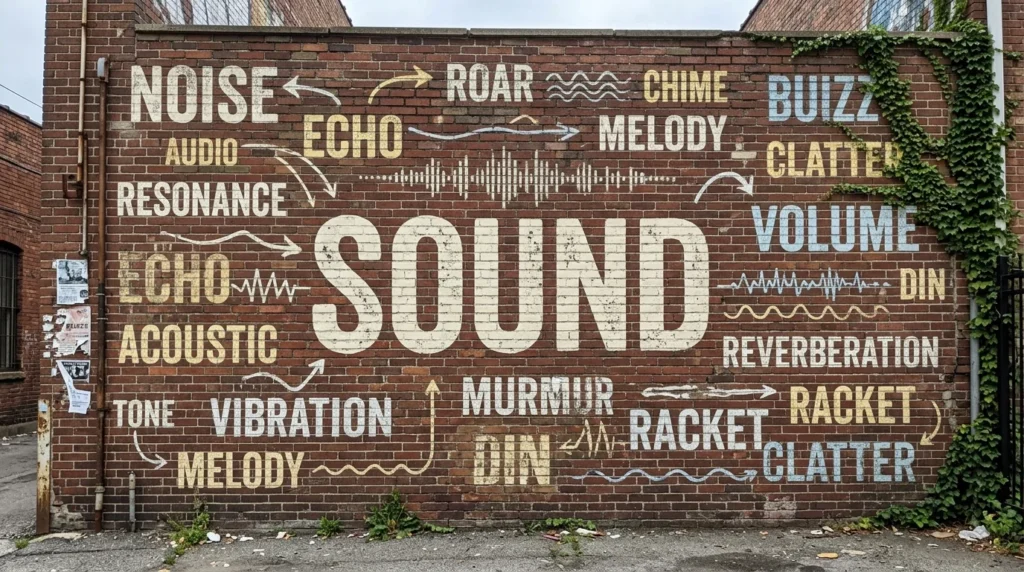
The best synonyms for sound depend on its meaning. For something you hear, use noise, audio, tone, voice, or acoustics. For a healthy or undamaged condition, use healthy, whole, intact, or strong. For a sensible idea or decision, use reasonable, sensible, solid, reliable, or well-founded.
Quick List of Synonyms for Sound
Here are useful alternatives grouped by meaning:
When sound means something you hear:
- noise
- audio
- tone
- voice
- note
- speech
- murmur
- hum
- buzz
- roar
- bang
- crack
- ring
- echo
- din
- clamor
- music
- vibration
When sound means a particular quality of audio:
- tone
- pitch
- timbre
- volume
- resonance
- vibration
- acoustics
- timbre
- quality
When sound means healthy or physically strong:
- healthy
- fit
- strong
- robust
- whole
- intact
- unharmed
- undamaged
- sturdy
- solid
When sound means sensible or reasonable:
- sensible
- reasonable
- rational
- logical
- practical
- wise
- prudent
- solid
- valid
- well-founded
- reliable
- trustworthy
- credible
When sound means to make a noise:
- ring
- buzz
- hum
- chime
- clang
- roar
- echo
- resound
- reverberate
- beep
Closest Synonyms for Sound
1. Noise
Relationship: Near synonym
Can replace sound? Usually, depending on context
Tone: Neutral; sometimes negative
Noise refers to an audible sound, especially one that is unwanted, irregular, or distracting.
- “I heard a strange sound outside.”
- “I heard a strange noise outside.”
These sentences are close in meaning. But noise often suggests something unpleasant or disruptive.
Best for: Everyday descriptions of unexpected or unwanted sounds.
2. Audio
Relationship: Contextual alternative
Can replace sound? Sometimes
Tone: Neutral, technical
Audio refers to sound that is recorded, transmitted, produced, or processed electronically.
- “The sound quality is excellent.”
- “The audio quality is excellent.”
Audio is especially natural when discussing recordings, videos, microphones, speakers, or digital media.
3. Tone
Relationship: Near synonym
Can replace sound? Context-dependent
Tone: Neutral, technical
Tone refers to the particular quality or character of a sound. It can also describe a person’s attitude in speech or writing.
- “Her voice had a gentle tone.”
- “The piano produced a rich tone.”
Tone is more specific than sound.
4. Voice
Relationship: Narrower term
Can replace sound? Only when referring to a person’s vocal sound
- “I recognized the sound of his voice.”
- “I recognized his voice.”
You cannot generally replace every use of sound with voice. A car engine, bell, or thunderstorm has a sound but not a voice.
5. Note
Relationship: Narrower musical term
Can replace sound? In musical contexts
A note is a particular musical sound or pitch.
- “She played a high note.”
- “The instrument produced a strange note.”
6. Echo
Relationship: Related term
Can replace sound? Only in specific contexts
An echo is a sound that is reflected and heard again.
- “We heard a sound in the cave.”
- “We heard an echo in the cave.”
An echo is a type of sound, not a general replacement for sound.
Synonyms for Sound Meaning “Healthy”
When sound describes a person’s body, health, or physical condition, its meaning changes completely.
Healthy
The simplest alternative when sound means physically healthy.
- “He is in sound health.”
- “He is in good health.”
Fit
Fit suggests being healthy and physically capable.
- “She is in sound physical condition.”
- “She is physically fit.”
Strong
Strong emphasizes physical strength or resistance.
- “The patient is in sound condition.”
- “The patient is strong and recovering well.”
Whole
Whole can describe something that remains complete and undamaged.
- “The structure remained sound.”
- “The structure remained whole.”
Intact
Intact means undamaged or still complete.
- “The building was structurally sound.”
- “The building remained intact.”
Robust
Robust suggests strength, health, or durability.
- “The system has a sound design.”
- “The system has a robust design.”
However, robust is not always a direct synonym. It usually emphasizes strength or resilience rather than simply being in good condition.
Synonyms for Sound Meaning “Sensible or Well-Founded”
This is one of the most important meanings of sound.
Consider:
“That is a sound argument.”
Here, sound does not mean something you hear. It means the argument is reasonable, well-supported, or logically reliable.
Sensible
Sensible is one of the closest everyday alternatives.
- “That sounds like a sound decision.”
- “That sounds like a sensible decision.”
Reasonable
Reasonable means logical, fair, or based on good judgment.
- “She made a sound choice.”
- “She made a reasonable choice.”
Rational
Rational emphasizes logic rather than emotion.
- “We need a sound approach.”
- “We need a rational approach.”
Practical
Practical emphasizes usefulness and realism.
- “That is a sound solution.”
- “That is a practical solution.”
Solid
Solid is common in professional and informal English.
- “He presented a sound argument.”
- “He presented a solid argument.”
It often suggests that an idea, argument, or plan has a strong foundation.
Well-founded
Well-founded is especially useful for arguments, beliefs, concerns, and conclusions.
- “The criticism was sound.”
- “The criticism was well-founded.”
Valid
Valid suggests that something is logically or factually acceptable.
- “She raised a sound objection.”
- “She raised a valid objection.”
Prudent
Prudent means showing careful and sensible judgment, especially about risk.
- “It would be sound to save some money.”
- “It would be prudent to save some money.”
Reliable
Reliable emphasizes dependability.
- “The proposal is based on sound evidence.”
- “The proposal is based on reliable evidence.”
These aren’t always interchangeable. Sound evidence means evidence that is dependable or methodologically strong; reliable evidence emphasizes consistency and trustworthiness.
Formal and Professional Alternatives for Sound
When sound means sensible, reliable, or well-supported, these alternatives work well in formal writing:
- well-founded
- reasonable
- rational
- valid
- logical
- prudent
- defensible
- credible
- reliable
- robust
- well-supported
- evidence-based
- justified
- legitimate
Example
Instead of:
“The committee made a sound decision.”
You might write:
“The committee made a well-founded decision.”
Or:
“The committee made a reasonable decision.”
Choose well-founded when evidence or reasoning is central. Choose prudent when careful judgment is central. Choose defensible when the decision can be supported against criticism.
Synonyms for Sound as a Noun
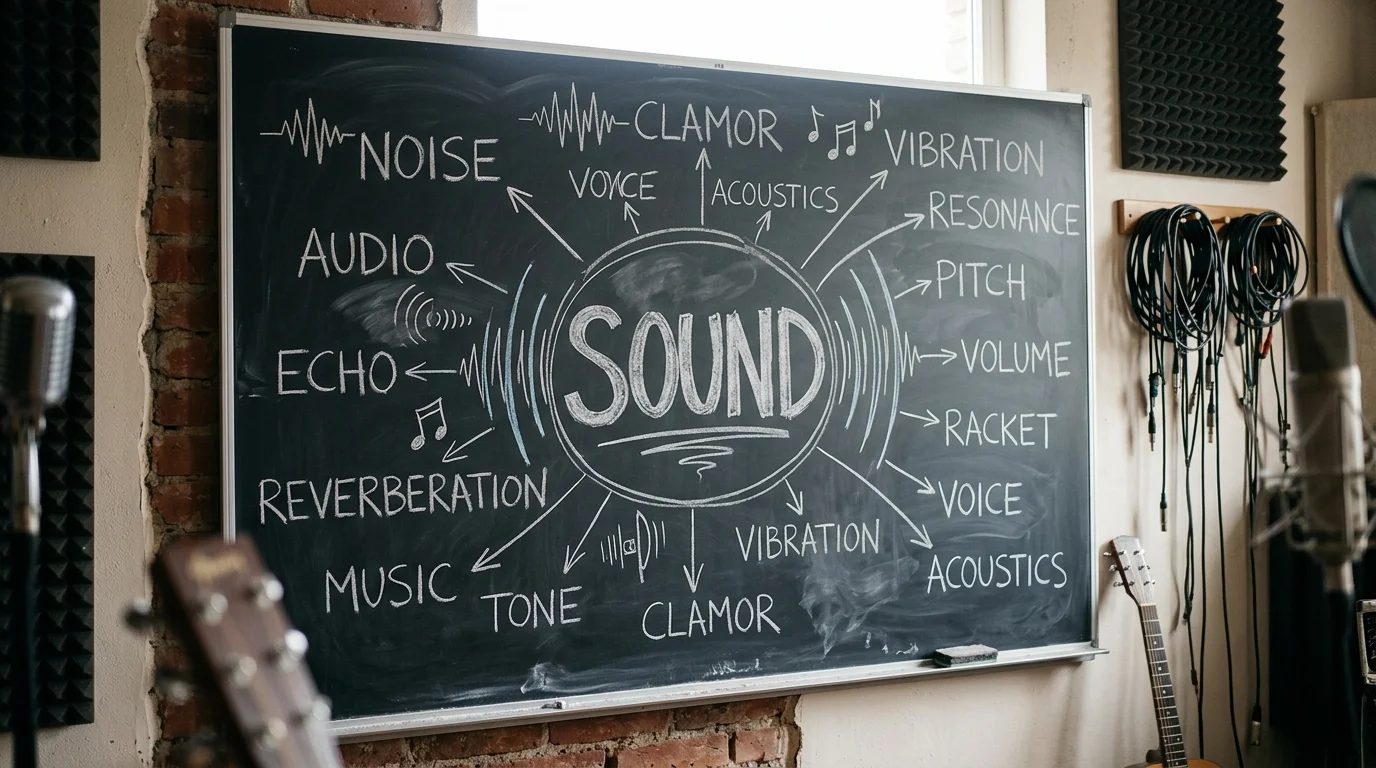
When sound means something that can be heard, these alternatives may fit:
| Alternative | Meaning | Best Use |
|---|---|---|
| noise | An audible sound, often unwanted | Everyday situations |
| audio | Recorded or transmitted sound | Technology and media |
| tone | A particular quality of sound | Voices, instruments |
| voice | Sound produced by a person | Speech |
| note | A specific musical sound | Music |
| echo | Reflected sound | Caves, mountains, rooms |
| murmur | A low, soft sound | Quiet speech or background noise |
| buzz | A continuous humming sound | Insects, electronics |
| hum | A low continuous sound | Machines, voices |
| roar | A loud, deep sound | Engines, crowds, storms |
| bang | A sudden loud sound | Doors, objects, impacts |
| ring | A clear, resonant sound | Bells, phones |
| din | Loud, unpleasant mixture of sounds | Crowds and busy places |
| clatter | Repeated hard, noisy sounds | Dishes, machinery |
| whisper | Very soft speech | Quiet communication |
Synonyms for Sound as a Verb
Sound can also be a verb, and its synonyms change according to the meaning.
Sound = Make a Noise
Possible alternatives include:
- ring
- buzz
- hum
- chime
- clang
- beep
- roar
- echo
- resound
- reverberate
Example:
- “The alarm sounded.”
- “The alarm rang.”
Sound = Seem or Give an Impression
In a sentence such as:
“That sounds interesting.”
Possible alternatives include:
- seem
- appear
- come across as
- appear to be
Examples:
- “That sounds reasonable.”
- “That seems reasonable.”
But sound often refers specifically to the impression created by someone’s words or an idea.
Sound = Examine With a Probe
This is a specialized medical or technical meaning. Depending on the context, alternatives may include:
- examine
- probe
- test
- inspect
This sense is much less common in everyday conversation.
Comparison Table: Synonyms for Sound
| Alternative | Relationship | Can Replace Sound? | Tone | Best Context |
|---|---|---|---|---|
| Noise | Near synonym | Usually | Neutral | Everyday audible sounds |
| Audio | Contextual | Sometimes | Technical | Media and technology |
| Tone | Narrower | Sometimes | Neutral | Voice and music |
| Voice | Narrower | Limited | Neutral | Human speech |
| Echo | Related | Limited | Neutral | Reflected sound |
| Healthy | Contextual | Yes, in health contexts | Neutral | Physical condition |
| Intact | Near synonym | Sometimes | Neutral | Undamaged objects |
| Sensible | Near synonym | Yes | Neutral | Decisions and ideas |
| Reasonable | Near synonym | Usually | Neutral | Judgments and proposals |
| Rational | Near synonym | Sometimes | Formal | Logic and reasoning |
| Solid | Near synonym | Often | Conversational/professional | Arguments and plans |
| Well-founded | Near synonym | Often | Formal | Claims and arguments |
| Prudent | Contextual | Sometimes | Formal | Careful decisions |
| Reliable | Near synonym | Sometimes | Neutral | Evidence and systems |
Sound vs. Noise: What’s the Difference?
Sound is the broad term. Noise is usually more specific.
Sound can be pleasant, neutral, or unpleasant:
- music is a sound
- a bird’s call is a sound
- thunder is a sound
- a loud alarm is a sound
Noise often suggests an unwanted, distracting, or disorganized sound.
Compare:
- “I love the sound of rain.”
- “The traffic noise kept me awake.”
Calling rain noise isn’t grammatically wrong, but it changes the feeling of the sentence.
Sound vs. Tone: What’s the Difference?
Sound is general. Tone describes a particular quality or character of sound.
- “I heard a sound.”
- “I noticed a serious tone in his voice.”
You can use sound without describing its quality. Tone usually focuses on that quality.
Sound vs. Audio: What’s the Difference?
Audio is especially common in technology and media.
- “The video has poor sound.”
- “The video has poor audio.”
In everyday speech, sound is usually more natural. In technical contexts, audio may be more precise.
Sound vs. Sensible: What’s the Difference?
When sound means sensible, the two can often overlap:
- “That is a sound decision.”
- “That is a sensible decision.”
However, sound can also emphasize that a decision is well-reasoned or based on a strong foundation. Sensible often emphasizes practical good judgment.
Sound vs. Solid: What’s the Difference?
Solid is a useful informal or professional alternative for sound when discussing ideas, plans, arguments, or reasoning.
- “That’s a sound argument.”
- “That’s a solid argument.”
Solid often sounds more conversational. Sound can sound slightly more formal or analytical.
How to Choose the Right Synonym for Sound
Use this quick decision guide:
If you mean something you can hear:
Choose noise, audio, tone, voice, note, echo, hum, buzz, or another specific sound word.
If you mean unwanted sound:
Choose noise, din, clamor, racket, or disturbance.
If you mean a person’s vocal sound:
Choose voice or tone, depending on what you want to describe.
If you mean a specific musical sound:
Choose note, tone, pitch, or timbre.
If you mean physically healthy:
Choose healthy, fit, strong, robust, or intact, depending on the subject.
If you mean sensible:
Choose sensible, reasonable, rational, practical, or prudent.
If you mean well-supported:
Choose well-founded, valid, justified, defensible, credible, or well-supported.
If you mean dependable:
Choose reliable, trustworthy, or sound, depending on the sentence.
Sentence Transformations
1. Original
“The machine makes a strange sound.”
Better alternative:
“The machine makes a strange noise.”
Why: Noise works naturally for an unusual mechanical sound.
2. Original
“The recording has excellent sound quality.”
Better alternative:
“The recording has excellent audio quality.”
Why: Audio is precise when discussing recordings.
3. Original
“She spoke in a calm sound.”
Better alternative:
“She spoke in a calm tone.”
Why: Tone describes the quality or manner of someone’s voice.
4. Original
“He made a sound decision.”
Better alternative:
“He made a sensible decision.”
Why: Sensible is a natural everyday alternative when sound means wise or reasonable.
5. Original
“The committee presented a sound argument.”
Better alternative:
“The committee presented a well-founded argument.”
Why: Well-founded emphasizes strong reasoning or evidence.
6. Original
“That sounds like a good plan.”
Better alternative:
“That seems like a good plan.”
Why: Seems can replace sounds when sound means “appears to be.”
7. Original
“The building is structurally sound.”
Better alternative:
“The building is structurally strong.”
Why: Strong can work when the emphasis is physical stability, although structurally sound is often more precise.
8. Original
“The bell sounded throughout the building.”
Better alternative:
“The bell rang throughout the building.”
Why: Rang gives the specific action instead of the general verb sounded.
9. Original
“She is in sound health.”
Better alternative:
“She is in good health.”
Why: Good health is more natural in ordinary conversation.
10. Original
“That is a sound investment strategy.”
Better alternative:
“That is a prudent investment strategy.”
Why: Prudent emphasizes careful and sensible judgment.
Grammar and Usage of Sound
Sound as a Noun
When sound means something you hear, it is commonly used as a countable or uncountable noun depending on meaning.
Uncountable:
- “I love the sound of rain.”
- “Sound travels through air.”
Countable:
- “I heard a strange sound.”
- “Several sounds came from the room.”
Sound + Of
Use sound of when identifying what produces the sound.
- the sound of rain
- the sound of laughter
- the sound of music
- the sound of footsteps
- the sound of an engine
Sound + Adjective
As a linking verb, sound is normally followed by an adjective:
- “That sounds good.”
- “You sound tired.”
- “The plan sounds reasonable.”
Don’t normally use an adverb here:
- ❌ “That sounds well.”
- ✅ “That sounds good.”
Sound Like + Noun
Use sound like before a noun or noun phrase.
- “That sounds like a great idea.”
- “You sound like your brother.”
Sound + Adjective
Use sound + adjective when describing an impression.
- “That sounds interesting.”
- “The proposal sounds practical.”
- “The explanation sounds convincing.”
Common Collocations With Sound
Some combinations are especially natural:
- sound quality
- sound system
- sound effects
- sound wave
- sound level
- sound recording
- sound barrier
- sound of music
- sound judgment
- sound advice
- sound reasoning
- sound argument
- sound decision
- sound evidence
- sound investment
- sound health
- sound condition
- sound structure
- sound asleep
- sound familiar
Common Mistakes With Sound Synonyms
1. Treating every sound as noise
Noise can suggest something unwanted or unpleasant.
Better: Use sound for a neutral description.
2. Using tone for every sound
A car engine has a sound, but tone usually focuses on a particular quality or character of sound.
3. Using audio in ordinary situations
“What’s that audio?” can sound unnatural when you simply mean an everyday sound.
More natural: “What’s that sound?”
4. Using healthy for every meaning of sound
“Healthy argument” is not normally a replacement for “sound argument.”
Better: “well-founded argument,” “valid argument,” or “strong argument.”
5. Confusing sound with volume
Volume describes how loud or quiet a sound is. It is not a general synonym for sound.
6. Confusing sound with pitch
Pitch describes how high or low a sound is. It is another specific property of sound, not a universal synonym.
7. Using sensible when sound means physically healthy
“The bridge is sensible” does not mean “the bridge is structurally sound.”
The correct alternative depends on the meaning.
8. Replacing sound just to avoid repetition
You don’t need to replace sound every time it appears. If sound is the clearest word, keep it.
When Not to Use a Synonym for Sound
Sometimes sound is the most natural and precise choice.
Keep sound when:
- you mean an audible sensation in general
- you are discussing sound waves
- you are talking about acoustics
- you mean the general quality of audio
- you need a broad term rather than a specific type of noise
- a technical phrase uses sound naturally
- replacing it would make the sentence less clear
For example, sound wave, sound barrier, and sound system are established expressions. Replacing sound with a thesaurus alternative can make these phrases unnatural or technically inaccurate.
Editor’s Choice: Best Alternatives to Sound
If you need a small set of dependable alternatives, start with these:
- Noise — best for an audible sound, especially an unwanted one.
- Tone — best for the quality or character of a voice or musical sound.
- Audio — best for recorded or electronic sound.
- Sensible — best when sound means reasonable or wise.
- Well-founded — best for arguments, claims, and conclusions supported by good reasoning or evidence.
Related Questions
- What is another word for sound?
- What is a synonym for sound in English?
- What is a better word for sound?
- What are synonyms for sound quality?
- What is another word for noise?
- What is a synonym for sound when describing a decision?
- What is the difference between sound and noise?
- What is the difference between sound and tone?
- What is a formal synonym for sound?
- What is another word for a strange sound?
FAQs
What is the best synonym for sound?
There is no single best synonym because sound has several meanings. Noise is useful for something heard, tone for a sound’s quality, audio for recorded sound, and sensible or well-founded when sound means reasonable.
What is a synonym for sound in formal writing?
For the meaning “sensible” or “well-supported,” useful formal alternatives include well-founded, rational, valid, prudent, defensible, and well-supported.
Is noise a synonym for sound?
Noise can be a synonym for sound in some contexts, but it is narrower. Noise often suggests an unwanted, unpleasant, or disorganized sound, while sound is neutral and broader.
What is a synonym for sound meaning sensible?
Good alternatives include sensible, reasonable, rational, practical, prudent, logical, solid, and well-founded. The best choice depends on whether you want to emphasize practicality, logic, caution, or supporting evidence.
What is another word for sound quality?
Depending on the context, you could use audio quality, tonal quality, fidelity, timbre, or acoustic quality. These terms aren’t identical, so choose based on what aspect of sound you mean.
What is the difference between sound and tone?
Sound is a broad term for something that can be heard. Tone usually refers to a particular quality, character, or pitch-related aspect of a sound, especially a voice or musical instrument.
What is the opposite of sound?
The opposite depends on the meaning. For physical condition, it might be damaged, unhealthy, or unsound. For reasoning, it might be flawed, illogical, weak, or unreliable. For an audible sound, there is no single direct opposite.
Key Takeaways
- Sound has several meanings, so its synonym depends heavily on context.
- Use noise, audio, tone, voice, or echo for different types of audible sound.
- Use healthy, fit, strong, or intact when sound describes physical condition.
- Use sensible, reasonable, solid, rational, or well-founded when sound describes an idea or decision.
- Don’t replace sound automatically; the original word is often broader and more natural.